
Ben Lahey on stigma and yes-or-no categorizing of “mental illness”

LCH Gradient Example. 14 May 2022. Author: Ahhhh6980. Licensed under CC BY-SA 4.0.

“The DSM (Diagnostic and Statistical Manual of Mental Disorders) wants us to believe — and of course, I don’t mean to be flippant, the founder or the people who write these diagnostic categories, they believe — that there are distinct unchanging categories of mental disorders. That’s not what the data say. The dimensionality of psychological problems makes us question the binary yes/no categories, but it’s also very important in terms of [reducing social] stigma [about seeking help for one’s difficulties].

“In a dimensional approach, there’s no hard line between normal and abnormal. There’s no hard line between normal and ill, to be sure. A person doesn’t need to think, ‘I might be mentally ill’ to go and seek help, to go and ask if there’s something that can be done to make [their] life happier and more functional. They simply, in a dimensional approach, have to say, ‘there are things about my behavior that just aren’t working. I want to go see if I can get some help.’

“Just like if you’re a tennis player, and you are now serving the ball consistently into the net and you just can’t get it right, you don’t have to call up your tennis pro and say, ‘I’ve fallen into the abyss of mental illness and I need your help.’ You just say, ‘hey, something about my game isn’t working. Can you look at it? Talk to me about things that I can do to make it more functional for me.’

“And so that game can be the game of life. We can go in and seek help in a way that doesn’t require admitting that we’re no longer like every other human being.”

— from Lahey, B., & Sharp, J. (2021, August). 226. Dimensional conceptualization of psychological problems w/ Dr. Ben Lahey. The Testing Psychologist Podcast.

Lahey, B. B. (2021). Dimensions of psychological problems: Replacing diagnostic categories with a more science-based and less stigmatizing alternative. Oxford University Press.

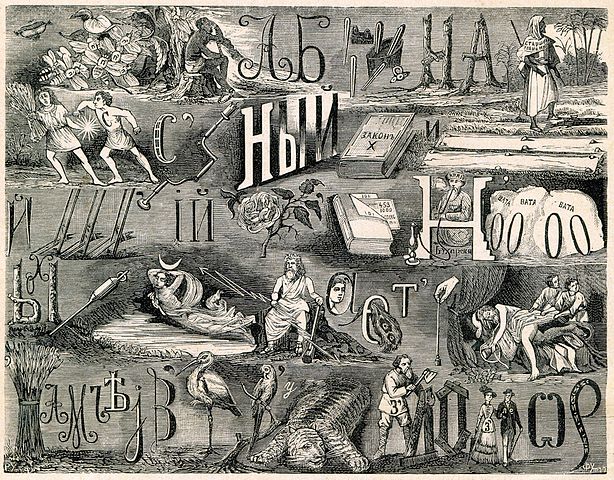
Michael Garrett on psychotic symptoms as a rebus

“The hybrid blends of thought, feeling, and perception that are the subject of this book are metaphorical expressions of the psychotic person’s mental life. Psychotic symptoms are like a rebus that tells a story with words and images. The word “rebus” comes from the Latin phrase, non verbis, sed rebus, meaning, “not by words, but by things.” A familiar rebus contained in books for young children alternates a picture of a cow with the word “cow” in the narrative of the story.

“Hallucinations, delusions, and other anomalous subjective experiences that occur in psychosis are a special sort of rebus in which an image linked to words is pressed not into print on paper, but rather into the canvas of surrounding reality in what Marcus has called “thing presentations of mental life” (Marcus, 2017). Psychotic persons communicate in words, verbal metaphors, and images composed of altered perceptions of the outside world. Collages of images, words, and hybrid subjective states coalesce to form psychotic symptoms.

Rebus from Russian spiritual magazine “Rebus.” 1883. Rebus by Koni (ru:Кони). Work in the public domain of the United States.

“A psychotic symptom may be the patient’s good-faith description of an anomalous state of mind or a sort of puzzle of the heart to be solved by the patient and therapist, with an emotional code to be deciphered. In some cases, the metaphorical meaning of the psychotic symptom is easily understood. In other instances, the meaning is obscured by altered self-states, or hidden by particularly idiosyncratic symbols and the scars of many years of traumatic living. The psychotic person in effect hides psychological pain in plain sight within the metaphorical meaning of the psychotic symptoms.

“The psychodynamic interpretation of a psychotic symptom invites the patient to express the metaphorical meaning of the symptom in words, connected with painful emotions, associated with adverse life experiences, a process that brings split-off elements of mental life back into conscious awareness, where they can be processed to foster emotional growth and recovery.”

— from Garrett, M. (2019). Psychotherapy for psychosis: Integrating cognitive-behavioral and psychodynamic treatment (1st ed.). Guilford Publications.

Marcus, E. (2017). Psychosis and near psychosis: ego function, symbol structure, treatment (3rd ed.). Routledge.

Medscape: ‘No evidence low serotonin causes depression?’

Selected excerpts:

“There is no convincing evidence that low serotonin levels are the primary cause of depression. This is the conclusion of an ‘exhaustive’ review by UK investigators, published online July 20 in Molecular Psychiatry, which upends the widely held belief that depression is the result of lower levels, or reduced activity, of the chemical. Researchers say the results call antidepressant use into question.”

“‘The serotonin hypothesis of depression still remains to be fully understood, [but that] does not negate the efficacy, safety, and tolerability of serotonin-based antidepressants,’ said Roger McIntyre, MD, professor of psychiatry and pharmacology, University of Toronto, Canada and head of the Mood Disorders Psychopharmacology Unit.

“‘We need better knowledge of the disease, and it is also the case that serotonergic modulation can help depression. We certainly need better treatment, and we should be careful that we do not become constrained by the paradigm of serotonin,’ McIntyre concluded.”

— from Yasgur, B. S. (2022, July 22). No Evidence Low Serotonin Causes Depression? Medscape Medical News.

Read the full article.