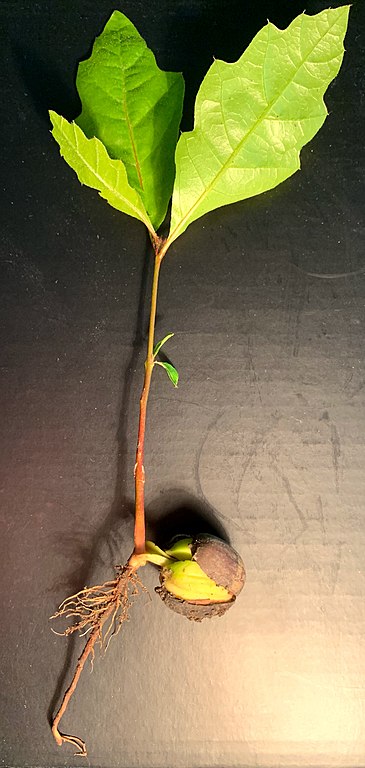
Biological birth is a definitive act whereby the infant organism is precipitated into the world. There it is, a new baby, a new biological entity, already with its own ways, real and alive, from our point of view. But what of the baby’s point of view? Under usual circumstances, the physical birth of a new living organism into the world inaugurates rapidly ongoing processes whereby within an amazingly short time the infant feels real and alive and has a sense of being an entity, with continuity in time and a location in space.
In short, physical birth and biological alive-ness are followed by the baby becoming existentially born as real and alive. Usually this development is taken for granted and affords the certainty upon which all other certainties depend. This is to say, not only do adults see children to be real biologically viable entities but they experience themselves as whole persons who are real and alive, and conjunctively experience other human beings as real and alive. These are self-validating data of experience.
The individual, then, may experience his own being as real, alive, whole; as differentiated from the rest of the world in ordinary circumstances so clearly that his identity and autonomy are never in question; as a continuum in time; as having an inner consistency, substantiality, genuineness, and worth; as spatially co-extensive with the body; and, usually, as having begun in or around birth and liable to extinction with death. He thus has a firm core of ontological security.
This, however, may not be the case. The individual in the ordinary circumstances of living may feel more unreal than real; in a literal sense, more dead than alive; precariously differentiated from the rest of the world, so that his identity and autonomy are always in question. He may lack the experience of his own temporal continuity. He may not possess an over-riding sense of personal consistency or cohesiveness. He may feel more insubstantial than substantial, and unable to assume that the stuff he is made of is genuine, good, valuable. And he may feel his self as partially divorced from his body.
It is, of course, inevitable that an individual whose experience of himself is of this order can no more live in a ‘secure’ world than he can be secure in himself. The whole ‘physiognomy’ of his world will be correspondingly different from that of the individual whose sense of self is securely established in its health and validity. Relatedness to other persons will be seen to have a radically different significance and function.
To anticipate, we can say that in the individual whose own being is secure in this primary experiential sense, relatedness with others is potentially gratifying; whereas the ontologically insecure person is preoccupied with preserving rather than gratifying himself: the ordinary circumstances of living threaten his low threshold of security.*
If a position of primary ontological security has been reached, the ordinary circumstances of life do not afford a perpetual threat to one’s own existence. If such a basis for living has not been reached, the ordinary circumstances of everyday life constitute a continual and deadly threat.
Only if this is realized is it possible to understand how certain psychoses can develop.
from Laing, R. D. (1965). The Divided Self: An Existential Study in Sanity and Madness (Revised ed. edition). Penguin.


 Matthew M. Sholler, Psy.D.

