In memory of Philip Cushman

On psychotherapy as a cultural artifact, not a ‘universal healing technology’
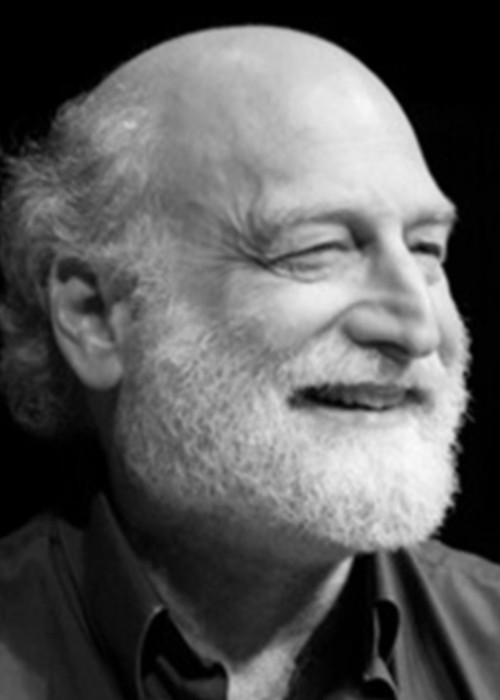
photo of Philip Cushman
Psychotherapist and hermeneuticist Philip Cushman, Ph.D, 1945-2022

“Psychotherapy has had many faces and utilized many ideologies during its stay in America. Several schools, such as nineteenth-century mesmerism, were considered in their time to be undeniably scientific and remarkably, almost magically, effective. Currently, the field continues to have its trends, its scientific claims, and its occasional superstars. The post-World War II era is the product of an individualism no longer leavened by a moral tradition of political discourse and communal values. American individualism, bereft of its once vibrant commitment to communalism, and under the enormous pressures of industrial capitalism, has all too often been used as a tool to promote consumerism and to bust unions.

“In the course of this book, I will argue that the current configuration of the self is the empty self. The empty self is a way of being human; it is characterized by a pervasive sense of personal emptiness and is committed to the values of self-liberation through consumption. The empty self is a perfect complement to an economy that must stave off economic stagnation by arranging for the continual purchase and consumption of surplus goods.

“Psychotherapy is the profession responsible for treating the unfortunate personal effects of the empty self without disrupting the economic arrangements of consumerism. Psychotherapy is permeated by the philosophy of self-contained individualism, exists within the framework of consumerism, speaks the language of self-liberation, and thereby unknowingly reproduces some of the ills it is responsible for healing. None of this is an accident. The self is a product of the complex, awe-inspiring cultural process that weaves together various elements of a society in order to perpetuate the status quo. The empty self is configured to fit our particular culture; it makes for a great deal of abundance and stimulation, isolation and loneliness.

“Notice that I am treating psychotherapy as a cultural artifact that can be interpreted, rather than as a universal healing technology that has already brought a transcendent ‘cure’ to earthlings. As a matter of fact, nothing has cured the human race, and nothing is about to. Mental ills don’t work that way; they are not universal, they are local. Every era has a particular configuration of self, illness, healer, technology; they are a kind of cultural package. They are interrelated, intertwined, interpenetrating. So when we study a particular illness, we are also studying the conditions that shape and define that illness, and the sociopolitical impact of those who are responsible for healing it.”

— excerpts from Cushman, P. (1996). Constructing the self, constructing America: A cultural history of psychotherapy. Hachette Books.

NY Times: What are the real warning signs of a mass shooting?

A tree in the desert outside of Tamchy, Kyrgyzstan. 15 September 2007. Author: Vmenkov. Licensed under GNU FDL 1.2.

While some mass shootings are committed by people with diagnosed mental illnesses, a life crisis is a better predictor of violence, researchers say.

Selected excerpts:

…mental illness is not a useful means to predict violence. About half of all Americans will experience mental health issues at some point in their lives, and the vast majority of people with mental illness do not kill.

“Do you or do you not have a mental health diagnosis?” said Jillian Peterson, a co-founder of the Violence Project, a research center that has compiled a database of mass shootings from 1966 on and studied perpetrators in depth. “In many cases, it doesn’t really matter. It’s not the main driver.”

Instead, many experts have come to focus on warning signs that occur whether or not actual mental illness is present, including marked changes in behavior, demeanor or appearance, uncharacteristic fights or arguments, and telling others of plans for violence, a phenomenon known as “leakage.”

This focus is far from perfect — it can be exceedingly difficult to weed out serious threats from many more that are idle, impetuous or exaggerated. But the warning signs approach has benefits: It can work even when the mental health system does not, and it sidesteps the complaint that blaming mass shootings on mental illness increases negative attitudes and stigma toward those who suffer from it.

“When someone treats you like a person when you don’t even feel like a human, it’ll change your entire world.”

Aaron Stark. From “I was almost a school shooter,” TEDxBoulder, June 26, 2018.

Crisis can be triggered or exacerbated by mental illness, but also by loss of a job, a breakup, divorce, death or other events. The mother of the Parkland [Florida] gunman died three months before he carried out his attack at the high school, from which he had been expelled.

This suggests that potential violence can be averted. In a TEDx talk called “I Was Almost a School Shooter,” a man named Aaron Stark recounted how a friend’s simple invitation to watch a movie helped divert him from his plans. “When someone treats you like a person when you don’t even feel like a human, it’ll change your entire world,” he said.

In interviews with perpetrators, Dr. Peterson said, “We would always ask, is there anything that could have stopped you? And they would always tell us, yes.” She added, “I think one of them said probably anyone could have stopped me, but there was just no one.”

— from Dewan, S. (2022, August 22). What are the real warning signs of a mass shooting? The New York Times.

ARAS on trees as symbols of personal growth

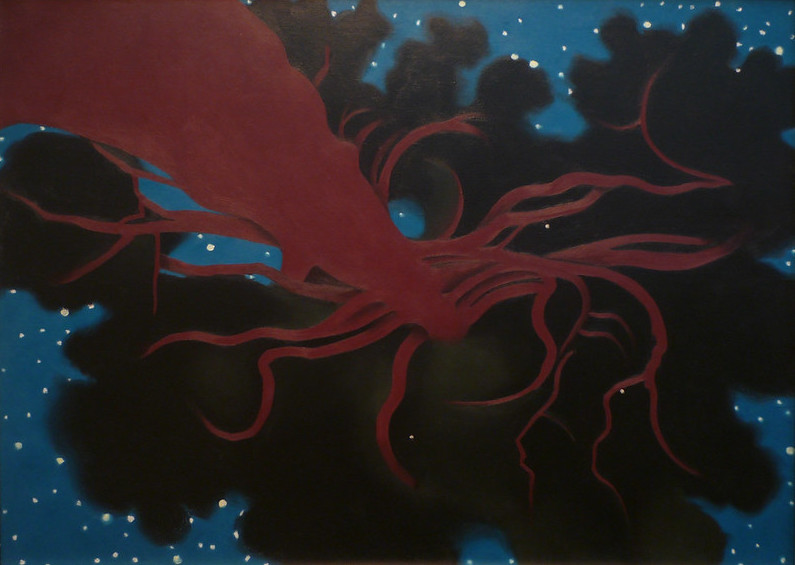
Georgia O’Keeffe, The Lawrence Tree, oil on canvas, 31 x 40 inches, 1929
(Wadsworth Atheneum, Hartford). Source: Steve Zucker. Licensed under CC BY-NC-SA 2.0.

“Alchemy made the tree a central symbol of its opus, because the tree depicted the nature of intense inner life and development that follows its own laws and can reveal the ‘evergreen’ within the individual. The alchemists did not forget that the tree may represent not only a place of awakening to new life, but also of suffering—mythic suspensions of sacrifice, ordeal, suicide, execution and reversal. A treasure guarded by snakes or dragons at the tree’s gnarled roots alluded to the difficulty of achieving a goal, the extraction of self from the tangle of unconscious factors (Collected Works of C.G. Jung, 13:304ff).

“Nevertheless intuitive fantasies portrayed the tree bearing the sun, moon and stars as luminous gold and silver fruits, the ‘metals’ of the planets hanging from branches, or the tree filled with flowers or singing birds, all expressive of spiritual enlightenment, the integration of many different forces of life and the fructifying imagination essential to symbolic process. At the top is the beautiful symmetry of the tree’s corona signifying the union of opposites.

“But while the alchemists saw this as the consummation of the work, the reality of the tree—and of psyche—is that such moments of obtainment are usually followed by new cycles of desiccation and growth.”

— from Archive for Research in Archetypal Symbolism. (2010). The book of symbols (A. Ronnberg & K. Martin (eds.)). Taschen.