A democracy cannot survive if its public squares are places where people fear speaking up and where no stable consensus can be reached. Social media’s empowerment of the far left, the far right, domestic trolls, and foreign agents is creating a system that looks less like democracy and more like rule by the most aggressive.
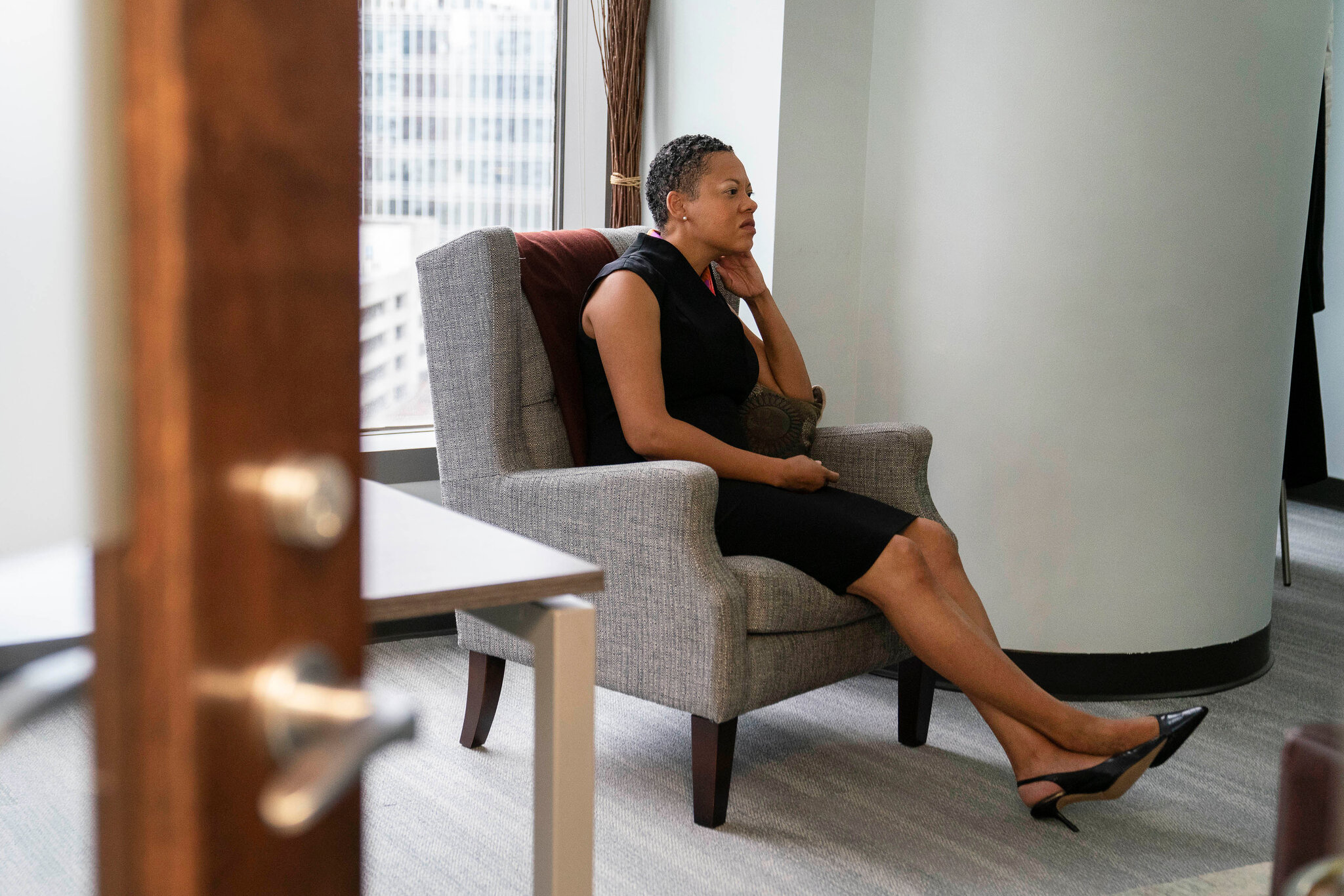
“I regularly wished aloud for a mental health version of Dr. Fauci to give daily briefings.” — Lakeasha Sullivan, clinical psychologist, Atlanta. Photograph by Christopher Capozziello for The New York Times.
Respondents said the higher demand was coming from both former patients who had returned for care and from new clients seeking therapy for the first time for anxiety, financial stress, substance use, job worries and other issues that have surfaced during the upheaval of the past 18 months. Many therapists say they are counseling health care workers who have been traumatized by caring for Covid-19 patients.
“The pandemic has functioned like a magnifying glass for vulnerabilities,” said Gabriela Sehinkman, a licensed clinical social worker in Shaker Heights, Ohio, who specializes in serving the Latino community.
And while the pandemic has been polarizing, our analysis found that the higher demands for therapy are happening in every region, and at similar rates in red and blue states.
“Even if some clients don’t recognize certain scientific aspects of the pandemic, they’re still feeling the isolation and separation,” said Nathan Staley, a licensed professional counselor in Kansas City, Mo. “Political disagreements are increasingly a source of distress.”
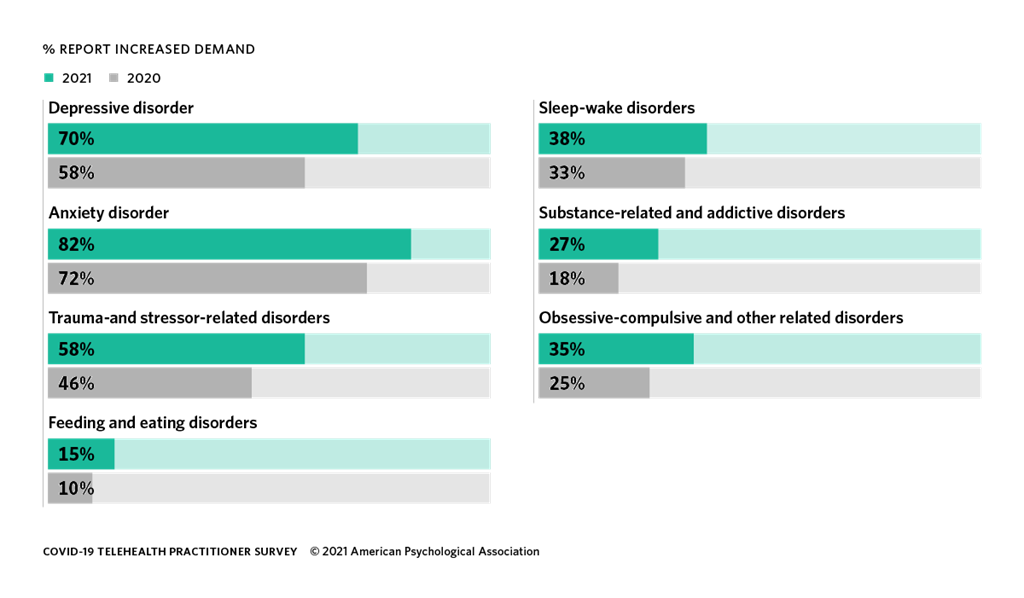
In this 2021 follow-up survey, many psychologists reported increases in demand for treatment of anxiety and depression. Additionally, many psychologists reported increased workloads, longer waitlists, and low capacity for new patients.
Most psychologists continued to see at least some patients remotely, while a greater proportion used a hybrid model, treating some patients in person and some remotely. Despite an increased number of psychologists reporting that they were able to maintain positive work-life balance and practice self-care compared with 2020, reports of burnout and the inability to meet patient demand have also increased in the same time frame.


 Matthew M. Sholler, Psy.D.
