Lao Tzu on choosing a past to build upon

Frozen Moat Outside City Walls. Jan Asselijn. Oil on canvas, circa 1647. Worcester Art Museum. Work in the public domain of the United States.

18. Second bests

In the degradation of the great way
come benevolence and righteousness.
With the exaltation of learning and prudence
comes immense hypocrisy.
The disordered family
is full of dutiful children and parents.
The disordered society
is full of loyal patriots.

— from Lao Tzu: Tao Te Ching: A book about the Way and the power of the Way (U. K. Le Guin, trans.; First edition). (1997). Shambhala.

“Reading the Tao Te Ching today, knowing what we now know about the history of China after its creation, it is easy to overlook the fact that the Tao Te Ching came first and the Confucianism we know about, the ruling religious/political system of China, came later. The author of the Way Virtue Classic was one of a small number of men in history gifted with, or cursed with, the ability to observe the beginnings of social phenomena and know where they will lead.

“Cursed, I say, because such people are destined to be ignored, disbelieved, and belittled by those around them who have no such ability. The majority of people in any society are carried along by social trends as leaves are carried along by the current of a stream. Later, with hindsight, they can look back and see that the prophets and their prophecies were correct. But by then, it is usually too late.

“What I believe the author is saying here and there in his writing is that Master K’ung [Fu-tzū, Confucianism’s founder] chose the wrong past to emulate. There was an older past, which, paradoxically, could have been built upon to help Chinese society move forward—a past in which people had lived in harmony with nature.

“In that time, people recognized that nature’s wisdom and power were far greater than their own, so they aligned themselves with her and lived their lives accordingly, without the superimposed rules and regulations of a Confucian system. That was the time before The Great Way was abandoned.”

— from Hoff, B. (2021). The eternal Tao Te Ching: The philosophical masterwork of Taoism and its relevance today. Harry N. Abrams.
Sarah Schulman on oppression, power, and punishment

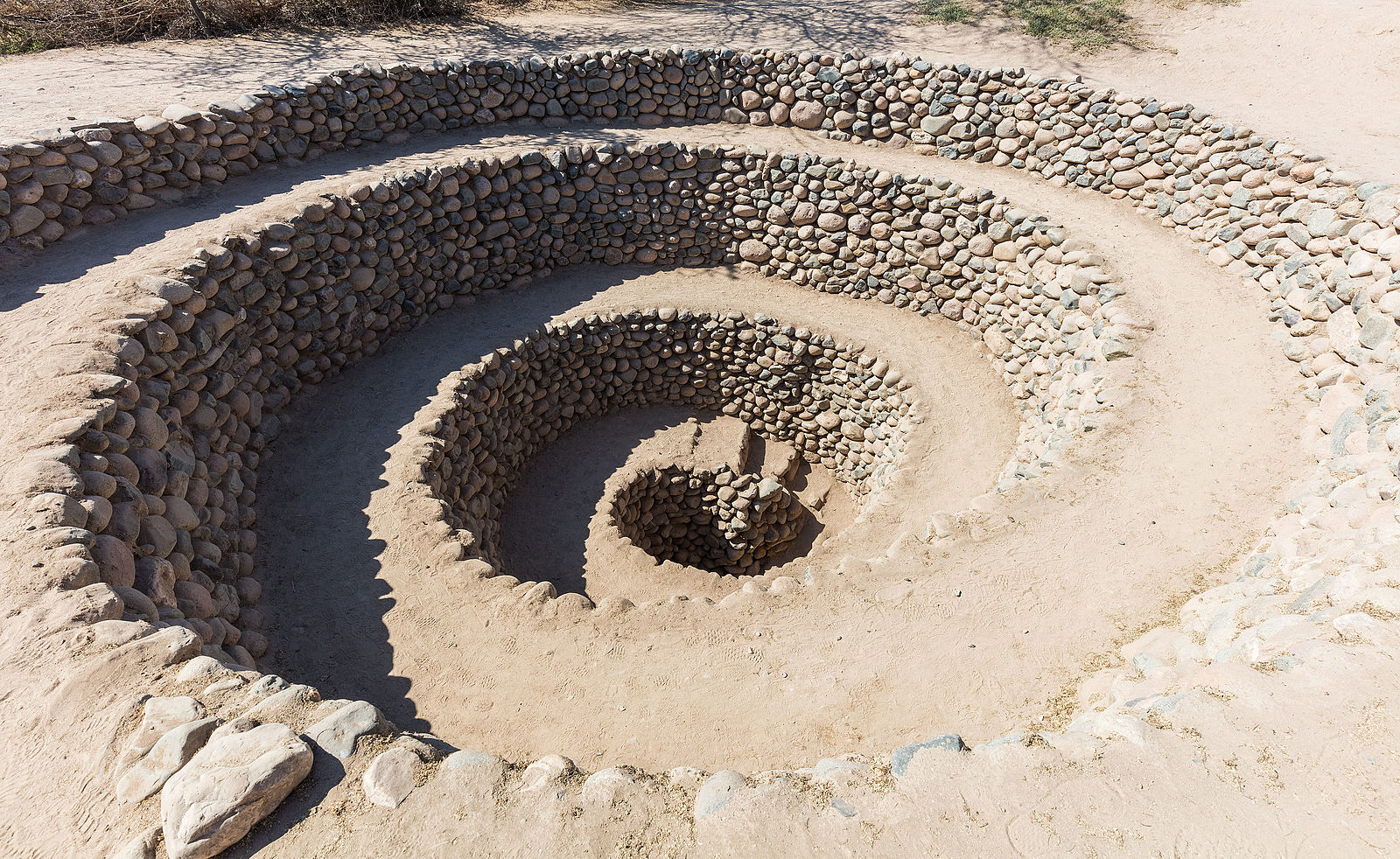
Cantalloc subterranean aqueducts, Nazca, Peru. Source: Diego Delso. Licensed under CC BY-SA 4.0.

“Just as unresolved, formerly subordinated or traumatized individuals can collude with or identify with bullies, so can unresolved, formerly subordinated or traumatized groups of people identify with the supremacy of the state. In both cases, the lack of recognition that the past is not the present leads to the newly acquired power to punish rather than to the self-transformation necessary to resolve conflict and produce justice.”

from Schulman, S. (2016). Conflict is not abuse: Overstating harm, community responsibility, and the duty of repair. Arsenal Pulp Press.

Krista Tippett on hope

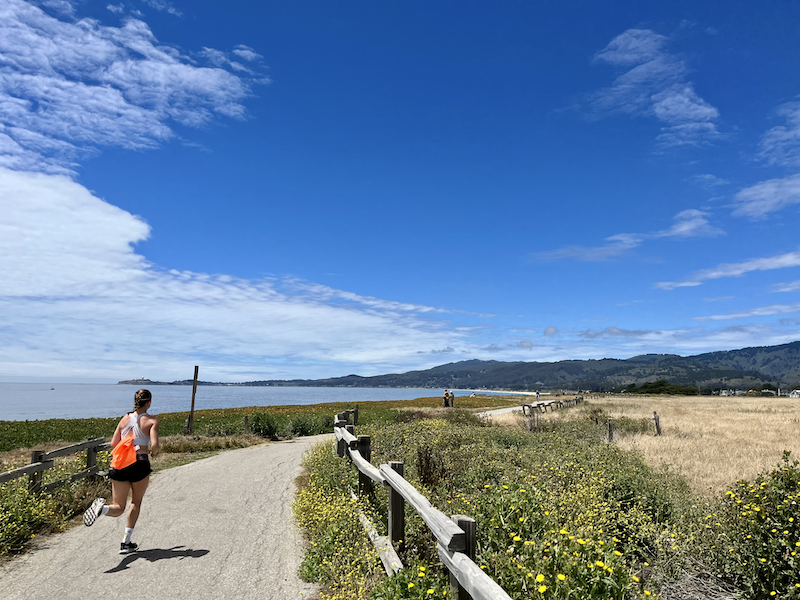
Running the bluffs over Poplar Beach, Half Moon Bay, California. © Matthew Sholler.

“I talk about hope being a muscle. It’s not wishful thinking, and it’s not idealism. It’s not even a belief that everything will turn out OK. It’s an imaginative leap, which is what I’ve seen in people like John Lewis1 and Jane Goodall2. These are people who said: ‘I refuse to accept that the world has to be this way. I am going to throw my life and my pragmatism and my intelligence at this insistence that it could be different and put that into practice.’ That’s a muscular hope. So, to your question, I don’t always feel robustly hopeful. Depression is something I’ve struggled with. I’ve found the world an unbearable place for months at a time in the last two years. But at the same time I don’t feel like there’s a place in my work for my despair.”

* * *

“None of us are perfect, but all over the place in every community and field of endeavor, there are people who are working generatively with the challenges before us; meeting them, rising to their best human capacities — at least on their good days — and creating new possibilities and realities. They’re not publicized, they’re not investigated, but that landscape is as real and important as that landscape of everything we can point out as failing and corrupt and catastrophic.”

— from Marchese, D. (2022, July 5). Krista Tippett Wants You to See All the Hidden Signs of Hope. The New York Times.

1 From the politician and civil-rights icon’s 2013 “On Being” appearance: “I think sometimes people are afraid to say, ‘I love you.’ . . . Maybe people tend to think something is so emotional about it. Maybe it’s a sign of weakness. And we’re not supposed to cry. We’re supposed to be strong, but love is strong. Love is powerful.”

2 The primatologist appeared on “On Being” in 2020: “Bizarre, isn’t it, that the most intellectual creature, surely, that’s ever lived on the planet is destroying its only home. And I always believe it’s because there’s a disconnect between that clever, clever brain and human heart, love and compassion.”