Point Sur lighthouse and its supporting lightstation buildings, now a California State Historic Park, stand atop a dramatic volcanic rock just off-shore in Big Sur, California. This historic aid-to-navigation has a modern aero-beacon which still guides ships along the treacherous Central California Coast. Source: Point Sur Lighthouse. Author: Jay Huang. Licensed under CC-BY-2.0.
“It’s going to behoove us to really pay attention to how [the use of artificial intelligence for dream interpretation] develops and differentiate between what is the strict pattern recognition component, which computers are just going to be better at than us, and that other component that is more psyche, more creative, the more soul side. That, in my opinion, is where healing comes from. I don’t think that working extensively with an AI model on dream interpretation gives you the kind of healing that a therapeutic relationship does. A therapeutic relationship seems like it’s about remodeling or adapting the way you relate to another human in better and more holistic ways.
“It’s my hope that it becomes clearer and clearer to us the value of humans’ ability, and certain humans’ ability, to do that kind of thing. But in the meantime, my perspective is that there are, for example in the U.S., only 6,000 to 9,000 Jungian-trained analysts in a population of 300 million. There just aren’t enough. My thought is, I want to get more people engaged with dreams, with these ideas, with the unconscious.”
— excerpted from Stewart, D., Marchiano, L., & Lee, J. (2024, June 20). John Temple: Does AI dream interpretation really work? – This Jungian Life [Streaming]. https://thisjungianlife.com/ai-dream-interpretation/
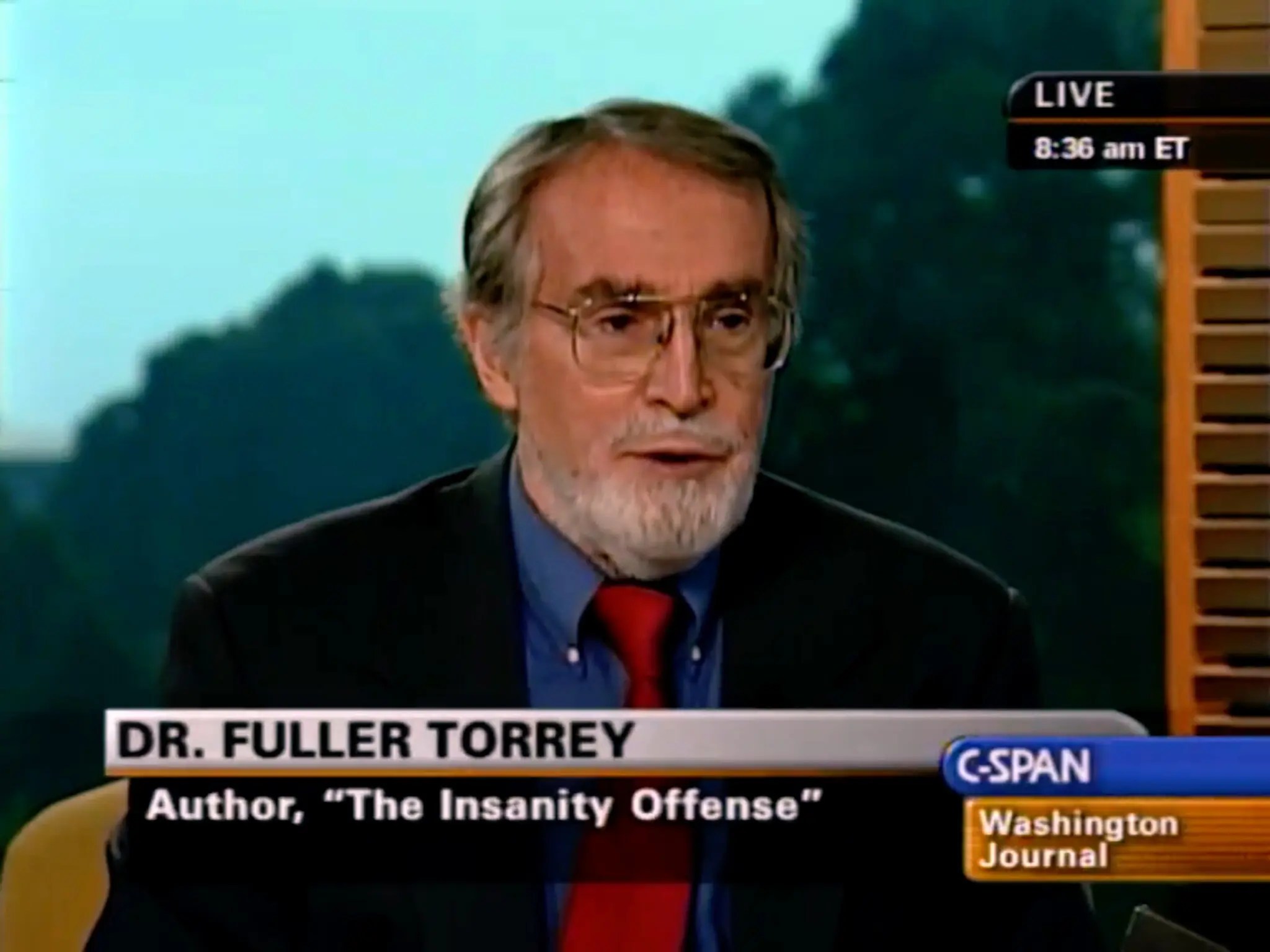
“The psychiatrist E. Fuller Torrey has been advocating tougher involuntary psychiatric treatment policies for 40 years. Now it’s paying off.”
Dr. Torrey appeared on C-SPAN in 2008 to discuss his book “The Insanity Offense: How America’s Failure to Treat the Seriously Mentally Ill Endangers Its Citizens.” Source: C-SPAN
Excerpt:
“‘About 4 percent of violent acts can be directly attributed to mental illness, and many of them are low-level assaults, [said Jeff W. Swanson, a sociologist at the Duke University School of Medicine who has researched dangerousness,] things like pushing and shoving and slapping people.’ But the fear that followed catastrophic incidents proved powerful, politically.
“'[Psychiatrist Dr. E. Fuller Torrey] is a communicator — he wants to put information out there that moves hearts and minds and policymakers,’ Dr. Swanson said. He also worried, like other experts interviewed, that tougher commitment laws could work only if mental health services like psychiatric beds and clinical care were widely available, which they are not.
“‘It’s absolutely correct that we need to get severely mentally ill people off the streets and out of awful conditions and into some sort of care,’ said [psychiatrist Dr. John Talbott, a past president of the American Psychiatric Association and] who served as superintendent at Manhattan State Hospital, which is now Manhattan Psychiatric Center. ‘But we have destroyed the care system in large parts. So I don’t know how to do it overnight.’”
A tree in the desert outside of Tamchy, Kyrgyzstan. 15 September 2007. Author: Vmenkov. Licensed under GNU FDL 1.2.
While some mass shootings are committed by people with diagnosed mental illnesses, a life crisis is a better predictor of violence, researchers say.
Selected excerpts:
…mental illness is not a useful means to predict violence. About half of all Americans will experience mental health issues at some point in their lives, and the vast majority of people with mental illness do not kill.
“Do you or do you not have a mental health diagnosis?” said Jillian Peterson, a co-founder of the Violence Project, a research center that has compiled a database of mass shootings from 1966 on and studied perpetrators in depth. “In many cases, it doesn’t really matter. It’s not the main driver.”
Instead, many experts have come to focus on warning signs that occur whether or not actual mental illness is present, including marked changes in behavior, demeanor or appearance, uncharacteristic fights or arguments, and telling others of plans for violence, a phenomenon known as “leakage.”
This focus is far from perfect — it can be exceedingly difficult to weed out serious threats from many more that are idle, impetuous or exaggerated. But the warning signs approach has benefits: It can work even when the mental health system does not, and it sidesteps the complaint that blaming mass shootings on mental illness increases negative attitudes and stigma toward those who suffer from it.
“When someone treats you like a person when you don’t even feel like a human, it’ll change your entire world.”
Crisis can be triggered or exacerbated by mental illness, but also by loss of a job, a breakup, divorce, death or other events. The mother of the Parkland [Florida] gunman died three months before he carried out his attack at the high school, from which he had been expelled.
This suggests that potential violence can be averted. In a TEDx talk called “I Was Almost a School Shooter,” a man named Aaron Stark recounted how a friend’s simple invitation to watch a movie helped divert him from his plans. “When someone treats you like a person when you don’t even feel like a human, it’ll change your entire world,” he said.
In interviews with perpetrators, Dr. Peterson said, “We would always ask, is there anything that could have stopped you? And they would always tell us, yes.” She added, “I think one of them said probably anyone could have stopped me, but there was just no one.”



 Matthew M. Sholler, Psy.D.