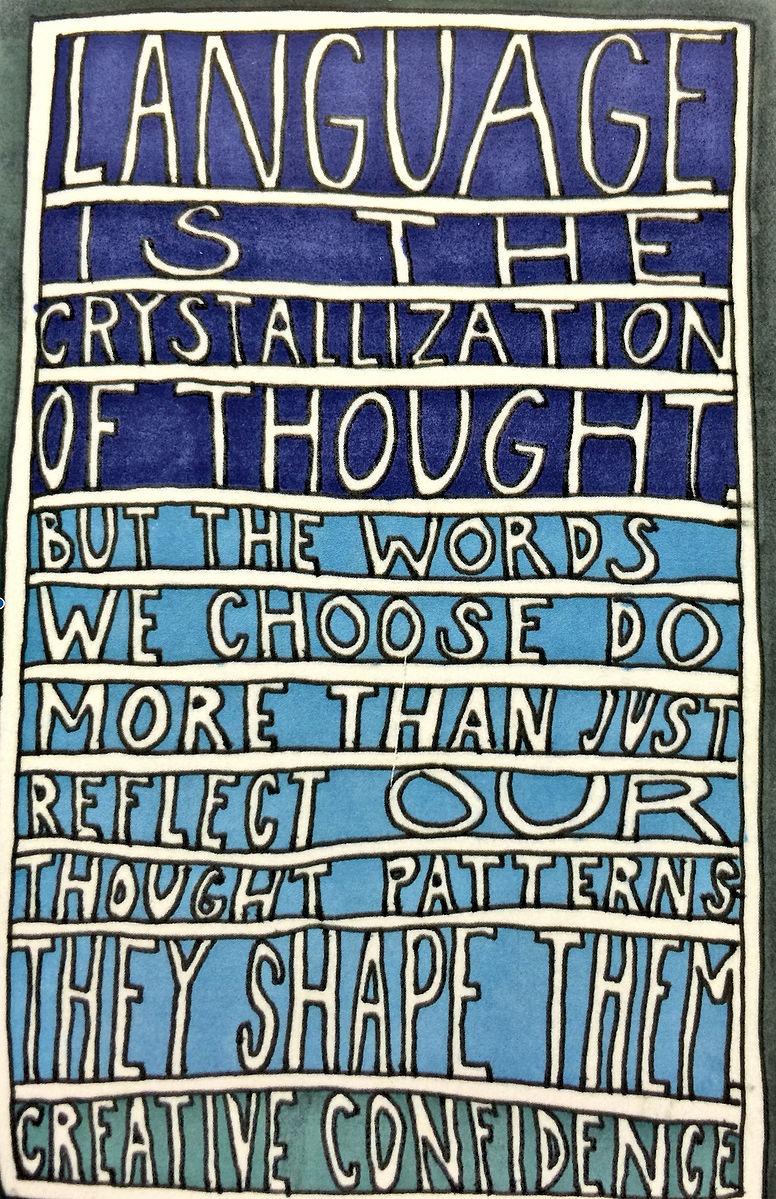
Journalist and author Rachel Aviv on the impact of how we express distress

Source: own work. Author: Caballero1976. Licensed under CC BY-SA 4.0.

“In a seminal 1934 paper in The British Journal of Medical Psychology, the psychiatrist Aubrey Lewis defined insight as the ‘correct attitude to a morbid change in oneself.’ A patient with the ‘correct attitude’ understands, for instance, that the spirits of dead people are not suddenly talking to her, that the voices she hears are symptoms that medication can silence. Insight looms large in decisions about whether to hospitalize people against their will, and it is assessed nearly every time a patient enters a psychiatrist’s office.

“But the ‘correct attitude’ may depend on culture, race, ethnicity and faith. Studies show that people of color tend to be rated as lacking in insight more than those who are white, perhaps because doctors find their modes of expressing distress unfamiliar, or because these patients have less reason to trust what their doctors say. In the starkest terms, insight measures the degree to which a patient agrees with her doctor.

“The correct attitude is also historically contingent. Fifty years ago, at the height of the psychoanalytic era, a patient was said to have insight if she could recognize, say, her repressed hatred for her mother and the way that emotion had structured her life. But by the 1990s, psychoanalytic theories fell out of favor and the correct attitude came to rest on a new body of knowledge: Mental illness was seen as a neurobiological problem, and people had insight if they understood that they had disorders of the brain.

“After the surgeon general’s first ever report on mental health, in 1999, which was focused on reducing the stigma of mental illness, the surgeon general announced that there is ‘no longer any scientific justification for distinguishing between mental illness and other forms of illness,’ in part because both had biological causes.

“But while a biological framework has alleviated some kinds of stigma, it has exacerbated others. A recent meta-analysis of 26 studies concluded that people who saw mental illness as fundamentally biological or genetic were less likely to blame mental conditions on weak character or to respond in punitive ways, but more likely to view a person’s illness as uncontrollable, alienating and dangerous.

“The disease came to be seen as static and unyielding, a strike of lightning that couldn’t be redirected. In her memoir ‘The Center Cannot Hold,’ Elyn Saks, a professor of law, psychology and psychiatry at the University of Southern California, wrote that when she was diagnosed with schizophrenia she felt as if she were ‘being told that whatever had gone wrong inside my head was permanent and, from all indications, unfixable. Repeatedly, I ran up against words like ‘debilitating’, ‘baffling,’ ‘chronic,’ ‘catastrophic,’ ‘devastating’ and ‘loss.’”

— excerpted from Aviv, R. (2022, September 20). How do we turn symptoms into words? / Do you need a “correct attitude” to understand your mind? The New York Times. Ms. Aviv is the author of the book “Strangers to Ourselves: Unsettled Minds and the Stories That Make Us,” from which this essay is adapted.
Poet and novelist Gioconda Belli on the rebellion of men against the feminine

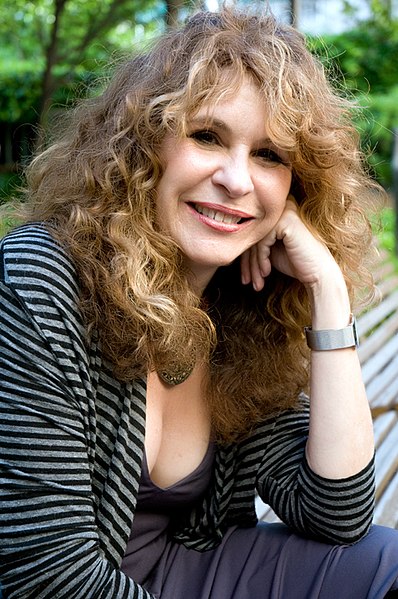
Nicaraguan poet and novelist, Gioconda Belli. Madrid, Spain, June 1, 2009. Licensed under CC BY-SA 4.0.

“Aunt Inés used to say that men were fickle and unfathomable. Nights walled off by stars. The stars were the cracks through which the woman peeked out. The men were the cave, the fire in the middle of the mastodons, the safety of broad chests, the large hands holding the woman in the act of love; beings who enjoyed the advantage of having no fixed horizons or the boundaries of confined spaces. The eternally privileged. Even though they all came out of the womb of a woman and depended on her to grow and breathe, to be fed, to have their first contact with the world, to learn words to speak; later they seemed to rebel with unusual brutality against this dependence, subduing the feminine sign, dominating it, denying the power of those who through the pain of open legs gave them the universe, life.”

Original Text

“La tía Inés decía que los hombres eran caprichosos e impenetrables. Noches cerradas con estrellas. Las estrellas eran los resquicios por donde la mujer se asomaba. Los hombres eran la cueva, el fuego en medio de los mastodontes, la seguridad de los pechos anchos, las manos grandes sosteniendo a la mujer en el acto del amor; seres que disfrutaban de la ventaja de no tener horizontes fijos, o los límites de espacios confinados. Los eternos privilegiados. A pesar de que todos salían del vientre de una mujer, que dependían de ella para crecer y respirar, para alimentarse, tener los primeros contactos con el mundo, aprender a conocer las palabras; luego parecían rebelarse con inusitada fiereza contra esta dependencia, sometiendo al signo femenino, dominándolo, negando el poder de quienes a través del dolor de piernas abiertas les entregaban el universo, la vida.”

— from Belli, G. (1988). La mujer habitada / The inhabited woman. Editorial Txalaparta s.l.

Mohsin Hamid on balancing realism and optimism

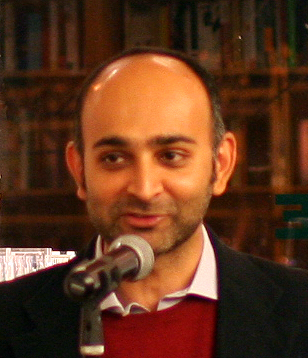
photo of Mohsin Hamid at a reading from his book, How to Get Filthy Rich in Rising Asia, at Greenlight Bookstore in Brooklyn, New York. Author: Mr. choppers
Mohsin Hamid at a reading from his book, How to Get Filthy Rich in Rising Asia, at Greenlight Bookstore in Brooklyn, New York. 12 March 2013. Author: Mr. choppers. Licensed under CC BY-SA 3.0

Ezra Klein: I’m curious, for you, about the practice, the discipline of trying to be able to imagine and articulate better futures, even as you try to be realistic about the present.

Mohsin Hamid: Well, I think that it’s always worth interrogating why we do stuff. And if you take, for example, a kind of pessimistic acceptance, which is not longing for the past, but a sense that the things that one wishes for — a more inclusive society, a less racist society, a more equal society — are slipping away for complicated reasons, and nothing can be done — the environment is just going to go to pot, and that’s sort of it.

The other part of it, though, is that it is incredibly difficult to reckon with this feeling of defeat, of loss. It isn’t “I seem to be losing out, the world is going in the wrong direction.” [It’s] “How do I survive this? How do I deal with my profound sense of despair at the situation?

And human life, I think, is a good parallel. So of course, we’re all going to get older. You know, of course, we’re all going to die. What is our stance in relation to that?

So it would be ridiculous to say, “Well, this is never going to happen to me. I feel like there’s a way out of this. I’m going to eat something or get an injection or something will happen, and it’s going to save me.” I can understand the appeal, but it seems profoundly misguided, as far as I can see.

It’s the optimism of “I have something of value yet to give, and it is meaningful for me to pass that on.”

Mohsin Hamid

But also to say, “You know what, I’m going to get old, nothing can be done, let’s just carry on.” It’s an interesting response, right? It’s entirely possible that we do learn something, that there is some wisdom.

And in [Hamid’s book, The Last White Man], for example, there’s the character of Anders’s father, who’s ill and who is dying, and whose mission, in a way, is to try to somehow pass on to his son how you die well. You know, what could this mean? What is it to do this thing? And in a sense, that is a, I think — Anders’s father has all sorts of views that I might not agree with, but in that particular attempt to pass on to his son something of meaning and something of wisdom from the old and from those near to mortality to those who are young, there is an activity there. And that’s something that the elders of every tribe throughout human history have done towards the young in their tribe forever.

We, I think, should consider that. And what kind of optimism does that mean? It’s not the optimism of “I will live forever.” It’s the optimism of “I have something of value yet to give, and it is meaningful for me to pass that on.” And so I suppose what I would come to on this is that the reaction of a kind of pessimistic acceptance, to me, feels like it is less than what could be hoped for. It is possible to try for more than that. And I think that, as a writer and as an artist, but also as a father and as a human being, it isn’t — while it’s understandable to me, it isn’t appealing to me.

— from Hamid, M., & Klein, E. (2022, August 12). How do we face loss with dignity? The Ezra Klein Show.