“This Jungian Life” Podcast: The Idea of Telos and Living Out Our Blueprint

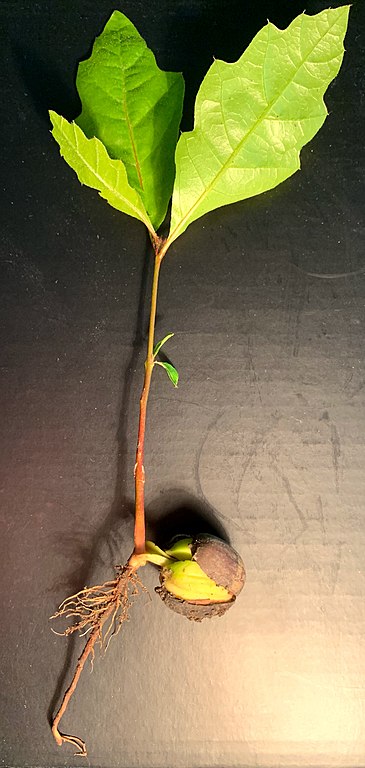
Oak sapling from yard in North Texas. Source: Thadguidry. Dedicated to the public domain under CC0 1.0.

…this idea of ‘life completion’ […] really fits in well with […] a sense of telos, this very Jungian idea that somehow there is some unfolding that is meant to happen, that we come into life almost with a blueprint. And part of the way I understand individuation is, how much of that blueprint do we get to live out?

…the sense of ‘life completion’ is something about […] the Jim Hollis question: ‘What is it that wants to come into the world through you?’ […] And did it mostly get here? Are you pretty satisfied that you got it out as much as you could, reasonably?

from Zweig, C., Stewart, D., Marchiano, L., & Lee, J. (2022, January 13). Episode 197 – The Inner Work of Age: Shifting from Role to Soul. This Jungian Life.

Listen to the full podcast below.

Carl Jung on Wholeness

When you are whole, you have discovered yourself once again and what you have been all the time.

from Carl Gustav Jung in Children’s Dreams: Notes from the Seminar Given in 1936-1940

Steven Stern on the Structure of Our Self-Experience

If we think of childhood, as the infant researchers do, as a series of intersubjective moments or interaction sequences [with a caregiver], within each sequence the child brings a primary subjective experience [authentic sense of self, or “true self”], which is met by some response or initiative from the caregiver.

Over the course of each interactive sequence, the inner state [of authenticity] that the child started with is transformed by the interaction; and, through many repetitions of similar moments, the infant forms and internalizes representations of that transformational interaction sequence. Such presymbolic, internalized representations are thought to form the basis of psychological structure (e.g., Stern, 1985; Beebe, Lachmann, and Jaffe, 1997; Beebe and Lachmann, 1998).

What [Christopher] Bollas’ model would have us focus on, however, is the relationship between what the child learns and internalizes from these interaction sequences and the original subjective states [of authenticity] that the child brought to the inteactions in the first place. As I conceptualize the self, it is this intrapsychic relationship [between authenticity and our experiences of the responses of others] that determines the momentary quality of self-experience.

from Stern, S. (2002). The Self as a Relational Structure: A Dialogue with Multiple-Self Theory. Psychoanalytic Dialogues, 12(5), 693–714.