Psychoanalyst and researcher Jeremy Safran on nonconscious process as a creative force

“There has been a recent resurgence of interest in the unconscious by relational [psychoanalytic] theorists, as exemplified in the work of…James Grotstein and Michael Eigen as well as some of Stephen Mitchell’s later writing. But the picture of the unconscious that emerges from these authors is a different one from Freud’s unconscious and from the writing of many European analysts. The unconscious that emerges in these writings is one that is creative and generative, rather than one that is dangerous or destructive. And the emphasis of these authors is on harnessing unconscious forces or being guided by them, rather than taming or modulating them.”

— from Safran, J.D. (2006, p. 394). The relational unconscious, the enchanted interior, and the return of the repressed. Contemporary Psychoanalysis, 42: 393-412.

Poet and novelist Gioconda Belli on the rebellion of men against the feminine

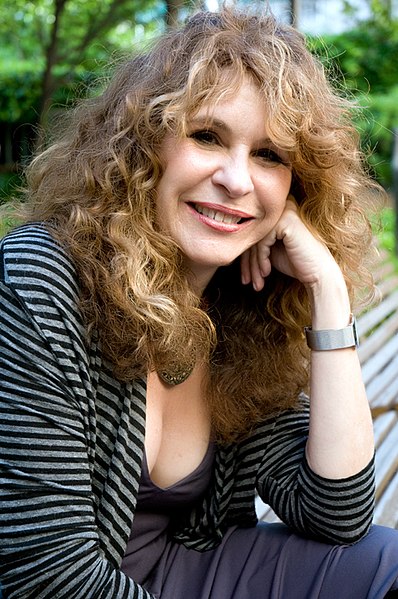
Nicaraguan poet and novelist, Gioconda Belli. Madrid, Spain, June 1, 2009. Licensed under CC BY-SA 4.0.

“Aunt Inés used to say that men were fickle and unfathomable. Nights walled off by stars. The stars were the cracks through which the woman peeked out. The men were the cave, the fire in the middle of the mastodons, the safety of broad chests, the large hands holding the woman in the act of love; beings who enjoyed the advantage of having no fixed horizons or the boundaries of confined spaces. The eternally privileged. Even though they all came out of the womb of a woman and depended on her to grow and breathe, to be fed, to have their first contact with the world, to learn words to speak; later they seemed to rebel with unusual brutality against this dependence, subduing the feminine sign, dominating it, denying the power of those who through the pain of open legs gave them the universe, life.”

Original Text

“La tía Inés decía que los hombres eran caprichosos e impenetrables. Noches cerradas con estrellas. Las estrellas eran los resquicios por donde la mujer se asomaba. Los hombres eran la cueva, el fuego en medio de los mastodontes, la seguridad de los pechos anchos, las manos grandes sosteniendo a la mujer en el acto del amor; seres que disfrutaban de la ventaja de no tener horizontes fijos, o los límites de espacios confinados. Los eternos privilegiados. A pesar de que todos salían del vientre de una mujer, que dependían de ella para crecer y respirar, para alimentarse, tener los primeros contactos con el mundo, aprender a conocer las palabras; luego parecían rebelarse con inusitada fiereza contra esta dependencia, sometiendo al signo femenino, dominándolo, negando el poder de quienes a través del dolor de piernas abiertas les entregaban el universo, la vida.”

— from Belli, G. (1988). La mujer habitada / The inhabited woman. Editorial Txalaparta s.l.

ARAS on trees as symbols of personal growth

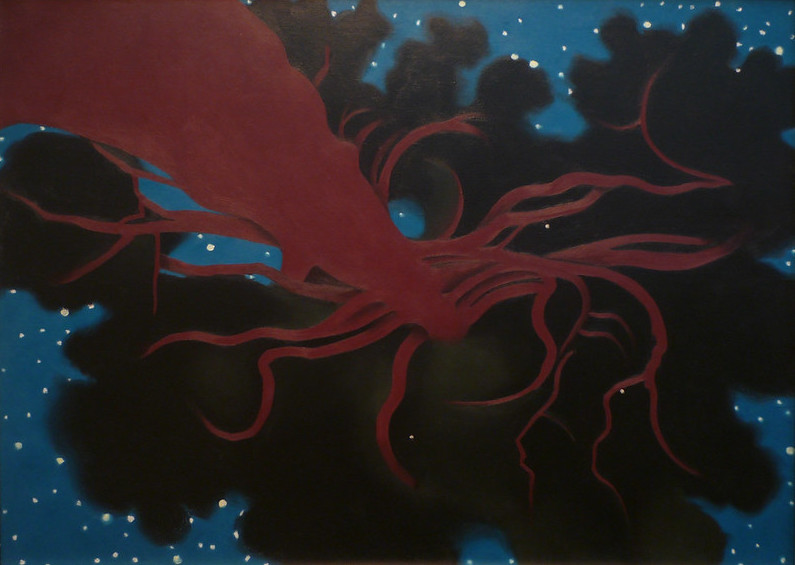
Georgia O’Keeffe, The Lawrence Tree, oil on canvas, 31 x 40 inches, 1929
(Wadsworth Atheneum, Hartford). Source: Steve Zucker. Licensed under CC BY-NC-SA 2.0.

“Alchemy made the tree a central symbol of its opus, because the tree depicted the nature of intense inner life and development that follows its own laws and can reveal the ‘evergreen’ within the individual. The alchemists did not forget that the tree may represent not only a place of awakening to new life, but also of suffering—mythic suspensions of sacrifice, ordeal, suicide, execution and reversal. A treasure guarded by snakes or dragons at the tree’s gnarled roots alluded to the difficulty of achieving a goal, the extraction of self from the tangle of unconscious factors (Collected Works of C.G. Jung, 13:304ff).

“Nevertheless intuitive fantasies portrayed the tree bearing the sun, moon and stars as luminous gold and silver fruits, the ‘metals’ of the planets hanging from branches, or the tree filled with flowers or singing birds, all expressive of spiritual enlightenment, the integration of many different forces of life and the fructifying imagination essential to symbolic process. At the top is the beautiful symmetry of the tree’s corona signifying the union of opposites.

“But while the alchemists saw this as the consummation of the work, the reality of the tree—and of psyche—is that such moments of obtainment are usually followed by new cycles of desiccation and growth.”

— from Archive for Research in Archetypal Symbolism. (2010). The book of symbols (A. Ronnberg & K. Martin (eds.)). Taschen.