Donald Kalsched on trauma

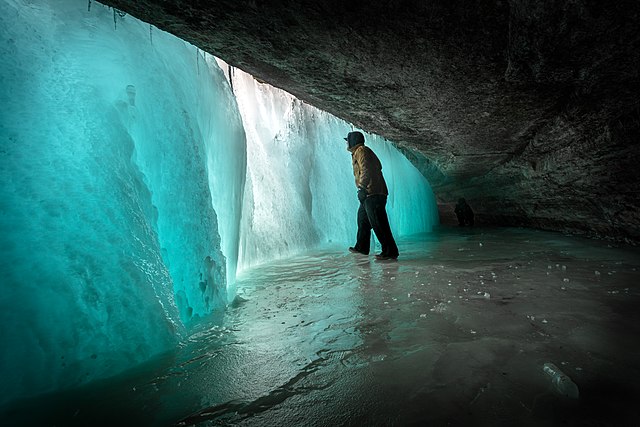
Photo of man behind frozen waterfall at Minnehaha Falls in Minneapolis, Minnesota. Author: Lorie Shaull.
Behind the frozen falls. Minnehaha Falls in Minneapolis, Minnesota. 3 March 2019. Author: Lorie Shaull. Licensed under CC BY-SA 4.0

Trauma is an injury to the capacity to feel.

Donald Kalsched, Jungian analyst, teacher, and author

from Kalsched, D., Lee, J., Marchiano, L., & Stewart, D. (2022, August 25). Episode 228 – Donald Kalsched: Trauma and the informed heart. This Jungian Life.

ARAS on trees as symbols of personal growth

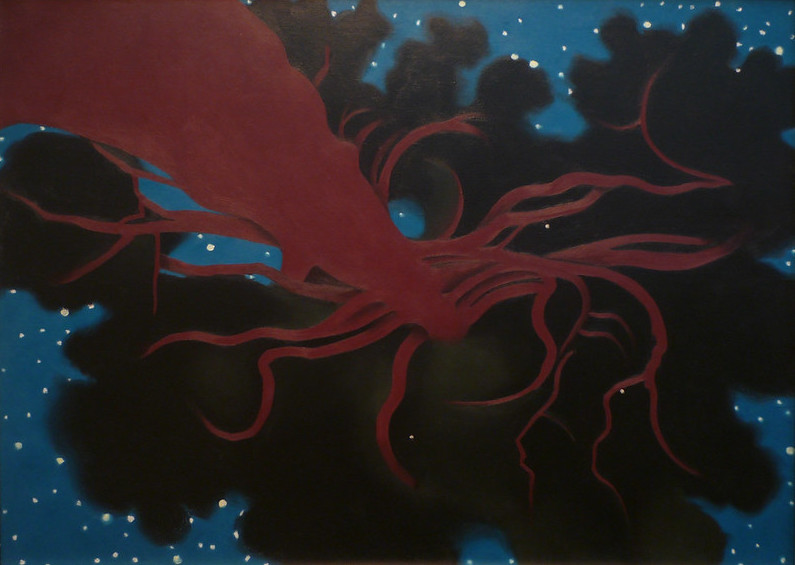
Georgia O’Keeffe, The Lawrence Tree, oil on canvas, 31 x 40 inches, 1929
(Wadsworth Atheneum, Hartford). Source: Steve Zucker. Licensed under CC BY-NC-SA 2.0.

“Alchemy made the tree a central symbol of its opus, because the tree depicted the nature of intense inner life and development that follows its own laws and can reveal the ‘evergreen’ within the individual. The alchemists did not forget that the tree may represent not only a place of awakening to new life, but also of suffering—mythic suspensions of sacrifice, ordeal, suicide, execution and reversal. A treasure guarded by snakes or dragons at the tree’s gnarled roots alluded to the difficulty of achieving a goal, the extraction of self from the tangle of unconscious factors (Collected Works of C.G. Jung, 13:304ff).

“Nevertheless intuitive fantasies portrayed the tree bearing the sun, moon and stars as luminous gold and silver fruits, the ‘metals’ of the planets hanging from branches, or the tree filled with flowers or singing birds, all expressive of spiritual enlightenment, the integration of many different forces of life and the fructifying imagination essential to symbolic process. At the top is the beautiful symmetry of the tree’s corona signifying the union of opposites.

“But while the alchemists saw this as the consummation of the work, the reality of the tree—and of psyche—is that such moments of obtainment are usually followed by new cycles of desiccation and growth.”

— from Archive for Research in Archetypal Symbolism. (2010). The book of symbols (A. Ronnberg & K. Martin (eds.)). Taschen.

“This Jungian Life” podcast: Our Attitude toward Death

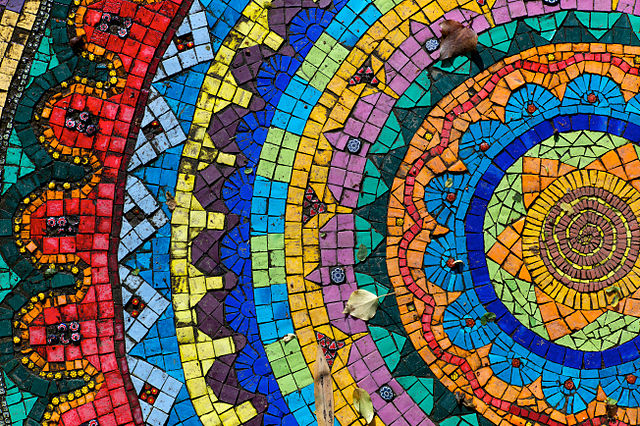
A mandala at Monte Verità, Ascona, Switzerland. Source: Marcobeltrametti. Licensed under CC BY-SA 4.0.

As a medical social worker in a trauma unit, I was frequently in situations where a family was being informed that their loved one had passed away or was passing away. I witnessed an extraordinary spectrum of ways that people had — or had not — developed a relationship with the archetype of death.

For the most part in American culture, it seems that we are so defended against the certitude of death, so frightened by the cessation of life, that we are often philosophically unprepared to imagine who we would need to be in order to gracefully slip into the hands of the death mother when the time is just right, to welcome the mercy of being liberated from our suffering. We make it more difficult, more painful, more frightening, more alien than perhaps it would need to be.

Certainly, we deprive ourselves of the elegant religious aesthetic that more ancient cultures had been able to cultivate. This was due in part because, lacking the technology we have in the modern age, they could not forestall death. Therefore, developing an attitude of acceptance of death was essential.

But also it seems that death was considered an intrinsic and essential part of life. Part of the religious shaping around death was the certitude that the ancestors continued to be in intimate relationship with their progeny, facilitating, protecting, helping, nurturing. The way we have adopted a scientific attitude in the modern era has deprived us of some of the essential aesthetic that the ancient world had around death.

Of course, embracing science and a scientific attitude has given us a great amount of benefits, but when facing existential realities like death, we have actually been deprived of the help we might have had. We insist on consciousness as the sole reality, we insist on cognition, we insist on science. But by its very nature, death is beyond our ability to think through or cognize.

This is where the realities of the unconscious can come into play, where we turn to mythology, we turn to images from religion, we turn to dreams, we turn to psychic life. But in our modern day world we tend to be so concrete, and so insistent on consciousness as the arbiter of reality, it makes something like death very foreign and alien.

from Stewart, D., Marchiano, L., & Lee, J. (2022, June 10). Episode 217 – Death: A Jungian perspective. This Jungian Life.

Without an understanding of myth, without an understanding of the relationship between destruction and creation, death and rebirth, the individual suffers the mysteries of life as meaningless mayhem alone.

Marion Woodman