
“In a seminal 1934 paper in The British Journal of Medical Psychology, the psychiatrist Aubrey Lewis defined insight as the ‘correct attitude to a morbid change in oneself.’ A patient with the ‘correct attitude’ understands, for instance, that the spirits of dead people are not suddenly talking to her, that the voices she hears are symptoms that medication can silence. Insight looms large in decisions about whether to hospitalize people against their will, and it is assessed nearly every time a patient enters a psychiatrist’s office.
“But the ‘correct attitude’ may depend on culture, race, ethnicity and faith. Studies show that people of color tend to be rated as lacking in insight more than those who are white, perhaps because doctors find their modes of expressing distress unfamiliar, or because these patients have less reason to trust what their doctors say. In the starkest terms, insight measures the degree to which a patient agrees with her doctor.
“The correct attitude is also historically contingent. Fifty years ago, at the height of the psychoanalytic era, a patient was said to have insight if she could recognize, say, her repressed hatred for her mother and the way that emotion had structured her life. But by the 1990s, psychoanalytic theories fell out of favor and the correct attitude came to rest on a new body of knowledge: Mental illness was seen as a neurobiological problem, and people had insight if they understood that they had disorders of the brain.
“After the surgeon general’s first ever report on mental health, in 1999, which was focused on reducing the stigma of mental illness, the surgeon general announced that there is ‘no longer any scientific justification for distinguishing between mental illness and other forms of illness,’ in part because both had biological causes.
“But while a biological framework has alleviated some kinds of stigma, it has exacerbated others. A recent meta-analysis of 26 studies concluded that people who saw mental illness as fundamentally biological or genetic were less likely to blame mental conditions on weak character or to respond in punitive ways, but more likely to view a person’s illness as uncontrollable, alienating and dangerous.
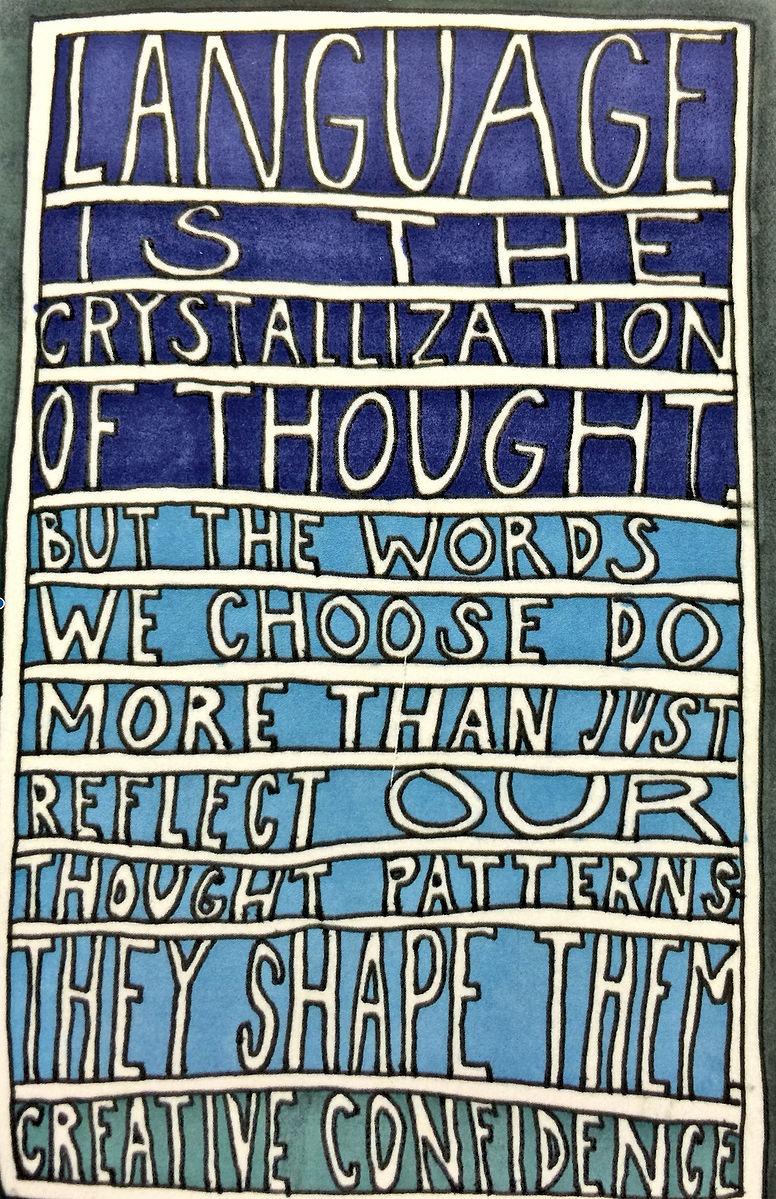
“The disease came to be seen as static and unyielding, a strike of lightning that couldn’t be redirected. In her memoir ‘The Center Cannot Hold,’ Elyn Saks, a professor of law, psychology and psychiatry at the University of Southern California, wrote that when she was diagnosed with schizophrenia she felt as if she were ‘being told that whatever had gone wrong inside my head was permanent and, from all indications, unfixable. Repeatedly, I ran up against words like ‘debilitating’, ‘baffling,’ ‘chronic,’ ‘catastrophic,’ ‘devastating’ and ‘loss.’”
— excerpted from Aviv, R. (2022, September 20). How do we turn symptoms into words? / Do you need a “correct attitude” to understand your mind? The New York Times. Ms. Aviv is the author of the book “Strangers to Ourselves: Unsettled Minds and the Stories That Make Us,” from which this essay is adapted.
 Matthew M. Sholler, Psy.D.